
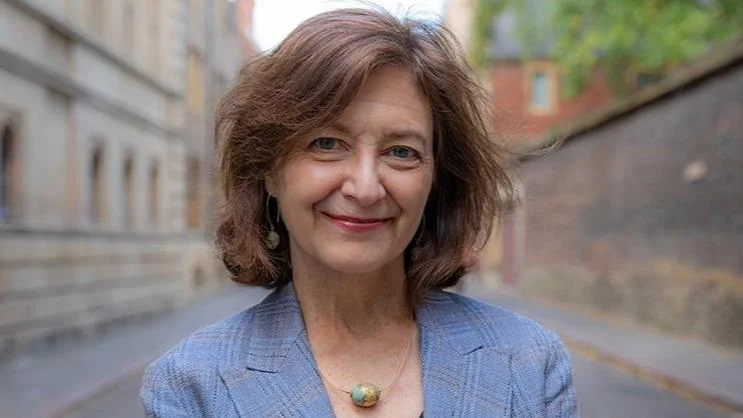
Dr. Carrie Soderman, a geochemist at the University of Cambridge, is preparing to represent Great Britain at the WDSF World Championship Formation Latin Adult in Vienna on December 13. While conducting fieldwork in Greenland, she continued to rehearse her dance routines during downtime, even practicing steps on the tundra while staying alert for polar bears.
Dr. Soderman is a Postdoctoral Researcher in the Department of Earth Sciences and a Fellow at Selwyn College. Her research focuses on understanding how rare earth elements form in specific environments by applying new modeling techniques to global case studies. These metals are important for developing green technologies.
She describes balancing her scientific work with her passion for Latin dance as providing a sense of equilibrium. “I’m not naturally the sort of person who would choose to wear fake tan and false eyelashes, that’s not me, partly because I’m a geologist and I like being outdoors. But I like having those two commitments, two things that I love doing equally.”
Dr. Soderman also notes that many members of her dance club, XS Latin, have backgrounds in science or medicine: “Even though we’re telling a story, there are lots of patterns, or ‘formations’. It’s very ordered for dancing, and my brain likes order and logic, so perhaps being a geologist and a formation dancer is not so strange! We have a really high proportion of scientists and medics on the team, and I don’t think that’s a fluke. There are a lot of degrees and doctorates floating around, most of which are in science.”
XS Latin was established by former Cambridge students—including current head coach David Mallabone—and welcomes both university affiliates and those from outside the institution. The club plans to hold auditions for new members ranging from beginners to experienced dancers in early 2026. Dr. Soderman joined after earning her PhD in Earth Sciences in 2022.
“Having a team around you is really motivating, because you’re representing the team as well as yourself," she said. "In formation dancing, you also have lots of tricks, some of the stuff that really isn’t in couples dancing – lots of throws and spins, so you’re developing new skills and it really makes you use your brain. The routines are longer too, so you’re telling a story for about six minutes, and in a way it’s actually more like a piece of theatre."
“The routine we’ve been working on for the world championships is themed around the musical Hamilton. It is definitely a step up from anything we've done before, so we’re really excited to see how well we can do with it.”