
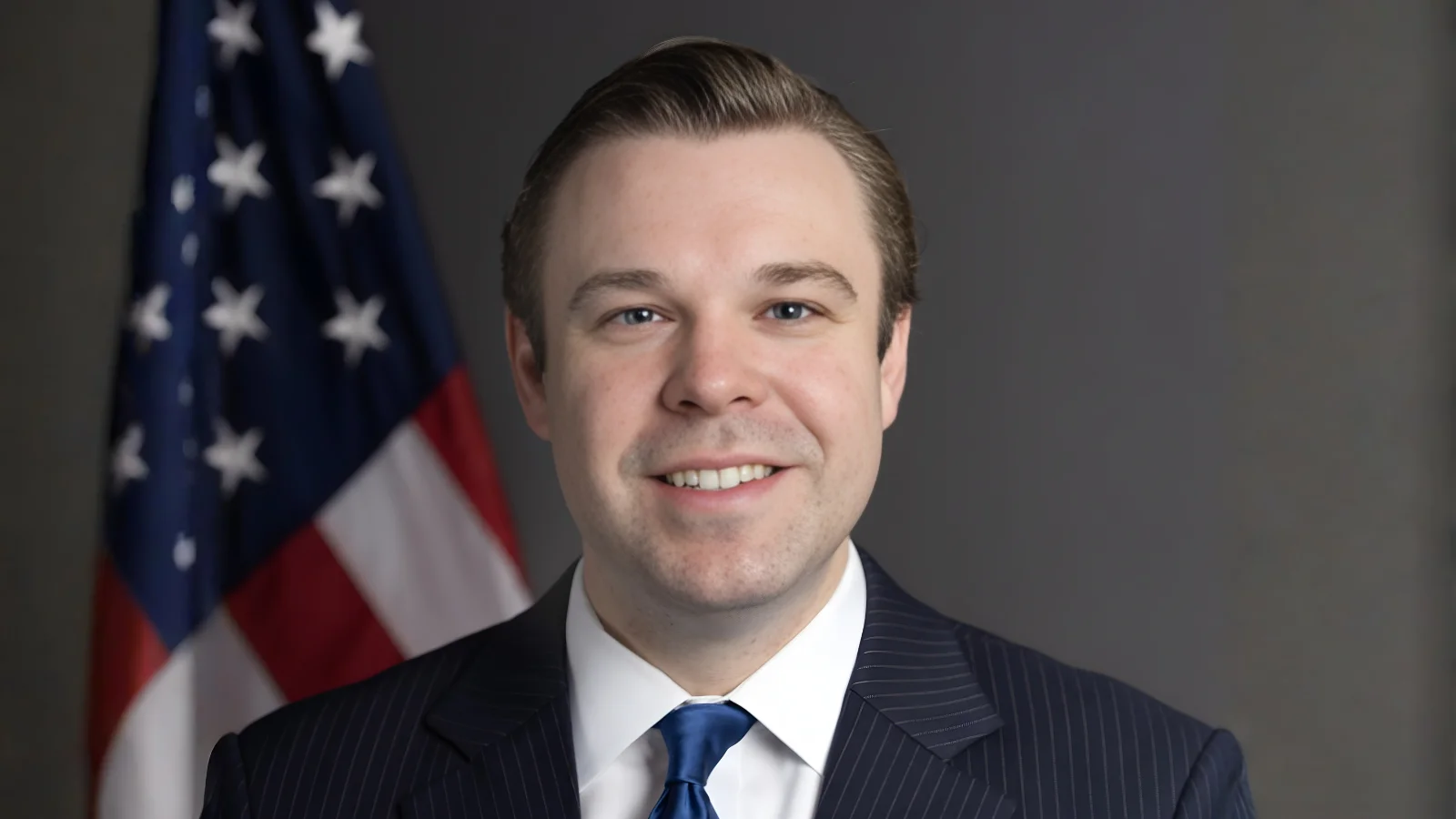
At the 116th Session of the Council of the International Organization for Migration (IOM) in Geneva, Spencer Chretien, Senior Bureau Official at the U.S. Department of State’s Bureau of Population, Refugees, and Migration, addressed a high-level panel on migration and development.
Chretien began by referencing IOM’s motto, “Migration for the Benefit of All,” but challenged this idea by stating that migration produces both winners and losers. He focused his remarks on those who he said are often unrepresented at international forums: “the ordinary citizens who pay the costs of migration.”
He highlighted what he described as significant financial burdens associated with immigration. “In my country, immigrant-headed households are one-third more likely to use welfare programs than households headed by the native born. Households headed by illegal immigrants are over 50 percent more likely. In many developed countries, illegal migrants receive free housing – often in hotels! – food, and mobile phones, all paid for by citizens, who understandably do not see how any of this benefits them,” Chretien stated.
He went on to question why public referendums on migration rarely occur in democracies: “Maybe that’s why no one, even in democracies, seems to want to put migration to a referendum. It must be imposed by courts, or international bodies, or somehow just allowed to happen in open contravention of the laws on the books.”
Chretien cited research suggesting that taxes paid by undocumented immigrants do not offset public expenditures: “One study estimated that each illegal immigrant in the United States costs our country about $68,000 over his or her lifetime. Multiplied by tens of millions, that’s a staggering amount.”
He also discussed how increased migration can affect housing markets and wages: “When migrants flood our countries the cost of housing, the supply of which is inelastic, skyrockets, which drives up the cost of living. As a tool of labor arbitrage, migration – even, or especially, ‘skilled’ migration – aims to drive down wages and working conditions for the native born.”
Chretien argued that these trends make it harder for younger generations to start families and contribute to demographic changes cited as reasons for increased immigration. He added: “We are literally dispossessing our children through mass migration. But financial costs are only part of the story.”
Addressing broader societal impacts, Chretien said: “Mass and illegal migration undermine the rule of law and social cohesion, both prerequisites for the functioning of democracy. Migrants, when they come en masse, recreate the conditions of their often-troubled homelands. We need only look at the headlines each day for illustrations of this principle, ranging from terror attacks to organized welfare fraud on an industrial scale to rape gangs preying on native girls.”
He concluded with an appeal: “I conclude with a plea on behalf of the citizens you represent who don’t want continued mass migration. As governments, our first duty is to safeguard their well-being. They pay our salaries. They pay for this room we’re meeting in. Do not sacrifice their concrete interests for abstract values propounded by globalist bureaucrats. We must pursue ‘re-migration for the benefit of citizens.’”
The session was part of ongoing discussions within IOM regarding international approaches to migration policy.