
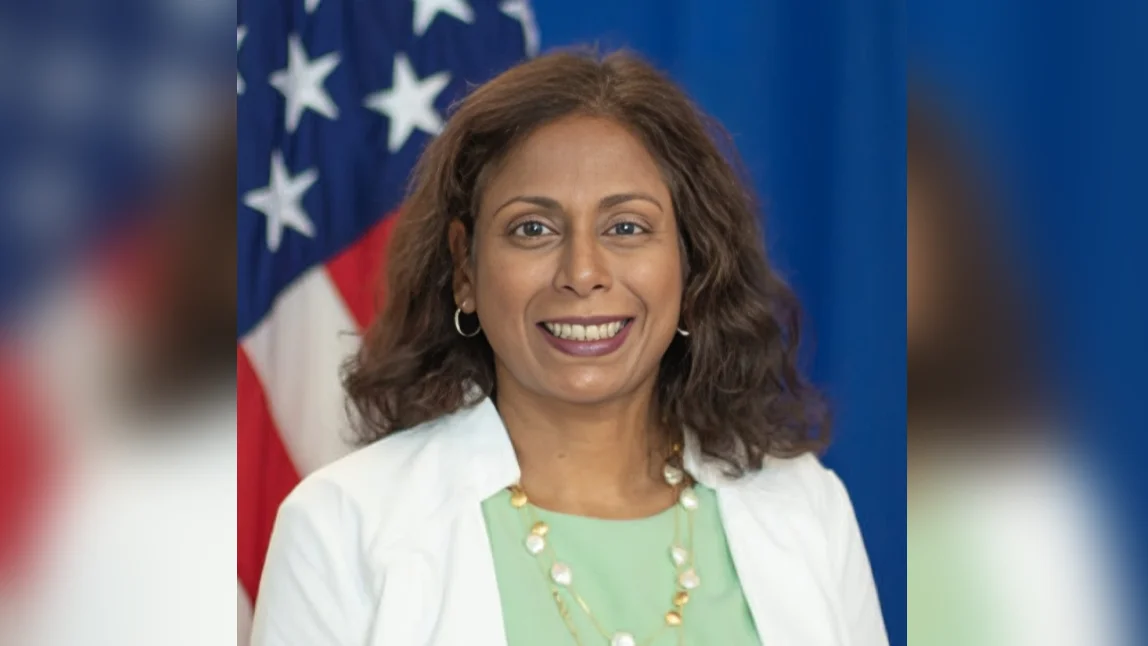
Chargé d’affaires Anu Prattipati of the U.S. Embassy in Kosovo addressed ongoing political and institutional challenges in an interview with Gazeta Express on August 4, 2025. The discussion comes after more than 170 days since Kosovo’s February elections, with no government or Assembly yet formed.
Prattipati stated that the prolonged deadlock is causing missed opportunities for Kosovo. “Forming a government following elections is a basic democratic function, and this continued political deadlock is resulting in lost opportunities for Kosovo. The Trump Administration looks for strong allies with whom we can advance our priorities; a country without core institutions and an uncertain path forward to establishing them is a partner we cannot always fully count on. American companies look for stable governments and reliable partners when considering where to invest and Kosovo’s inability to form institutions could cause companies to do business elsewhere. Opportunities to strengthen our economic relationship could pass by with an extended impasse. This is ultimately a decision for Kosovo’s elected representatives, but we encourage them to work together to fulfill the mandate that the Kosovan people have given them.”
Asked about international mediation, Prattipati emphasized local responsibility: “We are not in the business of nation building. As Deputy Secretary of State Landau said on the 30th anniversary of the Dayton Accords, ‘the United States can be a willing partner with considerable political capital. We can work hard; but we will work only with those committed to a ‘practical realism’ for their own countries.’ Kosovo’s leaders have been elected to solve the challenges facing their country. This means they must work together to find a compromise. It is the responsibility of these political leaders to resolve this impasse. The United States can offer support, but we cannot make the choices for the leaders or the people of Kosovo.”
Regarding recent Constitutional Court rulings directing parties to form institutions within set deadlines, Prattipati noted: “It is not for the United States to interpret the rulings of the Constitutional Court or how they should be implemented. The political leadership must work together to form institutions in accordance with the Constitution and the rulings of the Constitutional Court. The people of Kosovo are looking to their leaders to fulfill their commitment to working in the best interests of the country.”
On upcoming local elections in Serb-majority municipalities led by Albanian mayors after Serb officials withdrew last year, Prattipati cited Vice President J.D. Vance’s remarks at Munich: “‘You cannot win a democratic mandate by censoring your opponents.’ Later in the same speech he said, ‘I believe that dismissing people, dismissing their concerns, or, worse yet, shutting down media, shutting down elections, or shutting people out of the political process protects nothing. In fact, it is the more surefire way to destroy democracy.’ The Kosovan Serb political parties represent citizens of this country. They are a part of Kosovo’s political landscape and should not be blocked from political participation. All parties should support the right of the people to choose their representatives. This means preventing any effort to block the Kosovan Serb political parties from participating in the election. Using an administrative or procedural gimmick to prevent otherwise qualified parties or individuals from running would taint the outcome.”
When asked about U.S.-Kosovo relations amid government actions such as attempts involving bridges over Ibar River and closure of parallel Serbian institutions without coordination with affected communities, Prattipati commented: “Let me say this, the United States wants to strengthen ties, especially economically, with countries in the region. In order to do this, and enhance our mutual prosperity, we and the people of Kosovo need peace and stability. Actions that increase tensions in the region prevent the United States from being able to work productively with Kosovo.” She added concern over unilateral moves regarding education and healthcare integration: “Any plans to change status…must be fully coordinated…with elected leaders…of Kosovan Serb community…and coordinated via established channels such as EU-Facilitated Dialogue… There is no other way…”
Discussing broader bilateral relations under caretaker Prime Minister Kurti’s government—which has sometimes been described as uncoordinated—Prattipati affirmed U.S commitment: “The United States is committed to a strong and productive relationship with Kosovo and wants to cooperate on issues that advance regional stability, security, and prosperity.” She also noted that Senior Bureau Official Brendan Hanrahan visited Pristina recently encouraging conditions favorable for U.S investment.
Addressing speculation about future policy under another Trump Administration term toward Kosovo, Prattipati stated: “The Trump Administration has been clear: The U.S Government prioritizes security, safety, stability…and fair economic relationships... If…the government…shares these priorities…opportunities for cooperation are almost limitless…” She highlighted potential collaboration areas including energy, defense infrastructure information technology (ICT), and cybersecurity.