
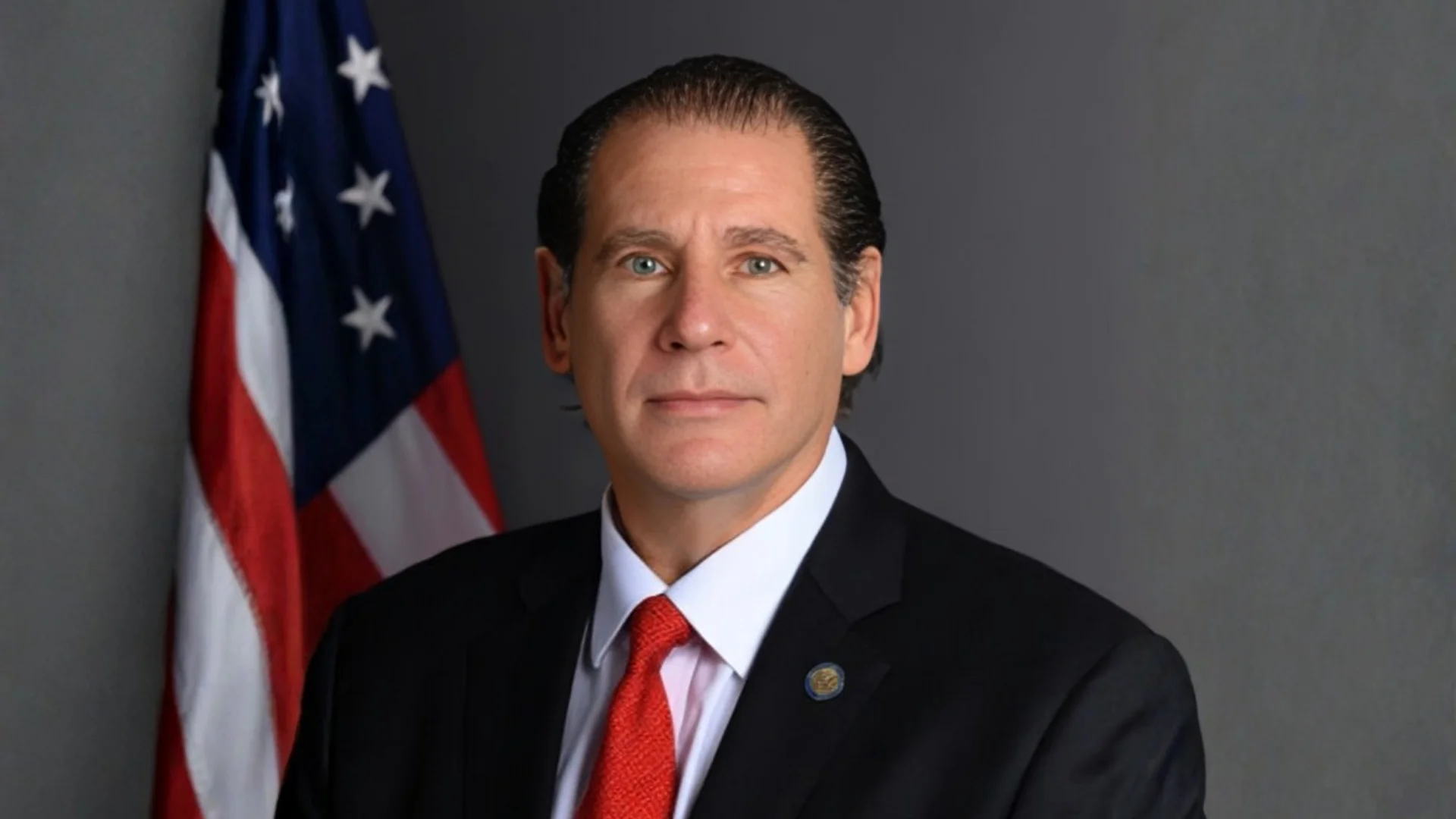
Leandro Rizzuto, the new U.S. Permanent Representative to the Organization of American States (OAS), delivered his inaugural address to the OAS Permanent Council, outlining the United States’ priorities and approach for engagement in the region.
Rizzuto expressed gratitude to President Donald J. Trump and Secretary of State Marco Rubio for their support, stating: "It is a profound honor to join you today as the Permanent Representative of the United States of America. I am deeply grateful to President Donald J. Trump for his confidence and to Secretary of State Marco Rubio for his leadership and his clear vision for a safer, stronger, and more prosperous Western Hemisphere."
He emphasized that “results matter,” adding: "President Trump has reaffirmed that America builds stronger partnerships when cooperation delivers real benefits for our citizens. And as Secretary Rubio has emphasized, security is the foundation of prosperity — without safety, nothing else can function."
Rizzuto identified four main priorities for U.S. engagement at the OAS: respecting sovereignty among member nations; strengthening democratic institutions; expanding trade and commercial partnerships; and modernizing the OAS for efficiency and accountability.
Addressing regional security challenges such as border insecurity, organized crime, illegal immigration, instability in Haiti, and external interference, Rizzuto said these issues require coordinated action beyond rhetoric. He stated: "A stable hemisphere begins with secure borders, lawful order, and strong institutions. Today, trafficking networks, organized crime, and illegal immigration undermine sovereignty, destabilize communities, and endanger our citizens. These threats cannot be met with rhetoric alone. They require coordination, intelligence-sharing, enforcement, responsible visa practices, and firm political will."
On Haiti’s ongoing crisis response efforts supported by both OAS members and recent UN resolutions authorizing international assistance missions there—including transitions toward specialized gang suppression forces—Rizzuto noted: "The United States welcomes the Haitian-led pathway endorsed at the last OAS General Assembly and the UN Security Council’s adoption of Resolution 2793... The OAS has a key role to play — strengthening institutions... supporting the Haitian National Police through the SECURE-Haiti platform... expanding humanitarian access... helping lay groundwork for elections." He stressed urgency on coordinated action: "Earlier this year every member state here declared together: Haiti cannot wait. The United States agrees. The time for coordinated action is now."
Highlighting economic development as another priority area—particularly public–private collaboration—he announced plans to convene sector-focused engagements involving OAS ambassadors with businesses from across manufacturing sectors including energy infrastructure technology digital access agriculture.
Rizzuto also voiced continued U.S. support for democracy advocates in Venezuela Nicaragua Cuba while praising OAS electoral observation missions as vital tools protecting popular sovereignty.
Regarding institutional reform within OAS itself he called for resource management improvements alternate income sources quota payment deadlines measurable outcomes performance enhancement mandate alignment elimination duplication clearer communication about organizational value—and reaffirmed commitment despite postponement of Tenth Summit of Americas noting ongoing preparatory work alongside Dominican Republic.
He concluded by emphasizing shared values around human dignity gender-based violence prevention accountable governance secure borders economic opportunity—saying: "Our goal is simple: to make the Americas — safer stronger more prosperous." He added recognition of current agenda focus on eliminating violence against women calling it “a shared priority across our hemisphere.”